


How to Choose Cat Stained Glass Suncatchers in 2026?

Choosing cat stained glass suncatchers in 2026 involves more than matching a window decoration to your favorite cat breed. The right piece should balance artistic detail, glass quality, color, safety, and the character of your room. Look closely at the solder lines. They should appear secure and reasonably consistent, not rushed or fragile. Examine the hanging loop, too. A beautiful panel becomes disappointing when its hardware bends after one season.

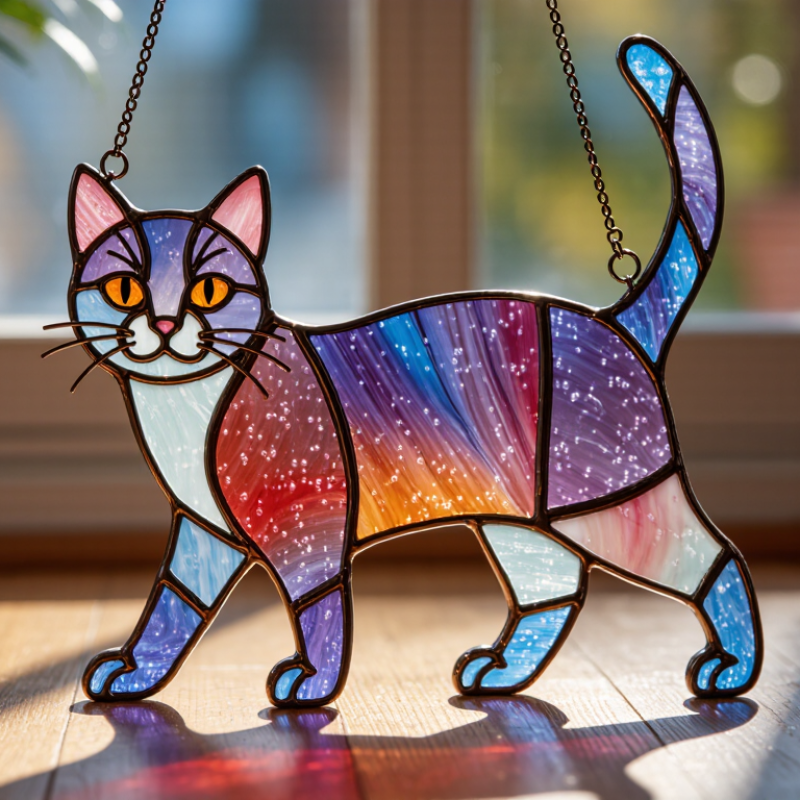
Stained-glass artist Judith Schaechter has said, “I want to make beautiful things that are also disturbing.” Her words offer a useful perspective for cat-themed designs. A memorable suncatcher does not need to look perfectly realistic. A raised tail, one bright amber eye, or a crooked ear can create personality. Handmade glass often contains small bubbles, uneven textures, and subtle color shifts. These details are not always defects. Sometimes, they prove that a human hand shaped the piece. Still, poor cutting, sharp exposed edges, or loose joints should not be excused as craftsmanship.

Consider where sunlight enters your home. Blue and violet glass may create cooler reflections, while amber and red pieces can cast a warmer glow across wooden floors. Measure the window before buying. Think about cleaning, weight, and indoor placement. A crowded window can hide delicate details. No checklist is perfect. Personal taste matters. Even so, choosing cat stained glass suncatchers with patience helps you find a durable artwork that feels personal, safe, and visually alive throughout the year.
How to Choose Cat Stained Glass Suncatchers in 2026?

Understanding Cat Stained Glass Suncatcher Styles and Materials

Choosing a cat stained glass suncatcher starts with style, not price. A lifelike cat suits traditional leaded glass, while a curled silhouette feels cleaner in copper-foil construction. Tiffany-style pieces often use narrow copper tape, allowing detailed ears, whiskers, and tails. Lead came creates stronger geometric lines, but it can look heavier in a small window. Light changes everything.

Materials also control color, weight, and daily maintenance. Cathedral glass gives clear, jewel-like light; opalescent glass softens sharp sunlight with milky texture. Iridescent glass adds flashes, though its effect may disappear on cloudy days. Acrylic is lighter and safer for rental homes, but it scratches more easily and usually lacks glass’s depth. The National Glass Association’s technical guidance emphasizes checking glass thickness, edge finishing, and hanging hardware before installation. Those details matter near moving curtains or open windows. In my own comparisons, a modest suction hook often felt less reliable than a wired hanger, even though it looked tidier. That was an avoidable mistake.

Market context can guide expectations. The 2024 Houzz & Home Study reported a median U.S. renovation spend of $24,000 in 2023, showing how carefully homeowners now evaluate small decorative upgrades. Meanwhile, the U.S. Department of Energy’s Residential Lighting End-Use Consumption Study found LEDs represented about 47% of residential lamps. A cat suncatcher should therefore be judged mainly by daylight performance, not nighttime brightness. Test the piece against morning and afternoon sun. Some colors look beautiful in photographs, but disappoint against a pale wall.

Choosing the Right Size, Shape, Colors, and Cat Design

Choosing a cat stained glass suncatcher starts with the window, not the cat illustration. Measure the clear glass area and leave at least 5–8 centimetres around the piece. A 15–20 centimetre design suits a kitchen window or small apartment. Larger panels need stronger hanging hardware and may overwhelm narrow glass. The American Pet Products Association reported 49.6 million U.S. households owned cats in its 2024–2025 National Pet Owners Survey. That broad audience still has different homes, lighting, and display habits. A compact circle feels friendly. An arched shape looks more architectural. Rectangles work well beside curtains or window frames.

Color needs practical judgment. Cats see blue and yellow tones more clearly than red and green, according to veterinary vision research summarized by International Cat Care. Those colors can make the eyes, collar, or moon easier to recognize through sunlight. However, strong contrast matters more than scientific color theory. Deep navy beside amber glass can create a visible silhouette on a bright afternoon. Pale glass may disappear against snow or white walls. I once chose a beautiful orange-heavy cat panel, but it looked dull in indirect light. That mistake still matters.

Choose the cat design from viewing distance. A curled cat reads clearly in a small suncatcher. A leaping silhouette needs more space and simple lines. Long whiskers and thin tails can become fragile details. Look for secure solder joints, smooth edges, and a balanced hanging point. The Global Pet Industry Association’s 2024 market review continues to show strong spending on pet-related lifestyle goods, but fashionable design does not guarantee durability. Check the construction, then accept a little visual imperfection; handmade glass rarely looks identical from every angle.

How to Choose Cat Stained Glass Suncatchers in 2026? - Choosing the Right Size, Shape, Colors, and Cat Design

Selection Dimension Recommended Choice Useful Measurement or Feature Why It Works What to Check Before Buying
Overall Size Medium size for most residential windows 20–30 cm wide or tall This size is visible from inside a room without blocking too much daylight or making a standard window look crowded. Measure the available glass area and leave space around the piece for light and visual balance.
Small Window or Narrow Pane Compact hanging design 10–18 cm wide A smaller panel fits bathroom windows, sidelights, apartment windows, and narrow sections without overlapping the frame. Confirm the hanging loop, chain, or suction hook will not extend beyond the window opening.
Large Window or Glass Door Large focal piece or coordinated grouping 30–45 cm wide or tall A larger design has enough visual weight to remain noticeable across a spacious window or glass door. Verify the total weight, hanging method, and clearance from handles, curtains, and moving doors.
Shape Arch, circle, oval, or simple rectangular panel Match the window geometry Repeating the window’s lines creates a more organized appearance, while rounded shapes soften rooms with many straight edges. Compare the shape with the window frame, nearby furniture, and curtain outline.
Cat Silhouette Clear profile, sitting cat, curled cat, or paw motif One dominant silhouette with limited small details A recognizable outline remains readable when the suncatcher is viewed from several feet away and when sunlight passes through it. Look for an unmistakable head, ears, tail, and body posture rather than a crowded outline.
Cat Breed Styling Choose features that reflect the intended cat type Short ears, pointed ears, long tail, or fluffy outline Distinctive physical features can make the design feel more personal while preserving the universal appeal of a cat shape. Ensure the breed-inspired details are visible at the final hanging distance.
Main Glass Colors Two to four coordinated colors One dominant color plus one or two accents A restrained palette keeps the cat recognizable and prevents the window display from competing with the room’s existing colors. Compare the glass colors with wall paint, curtains, flooring, and the direction of incoming sunlight.
Warm Color Palette Amber, honey, copper, coral, or warm red accents Best for rooms with cream, beige, brown, or terracotta tones Warm transparent glass can create a welcoming appearance and complements interiors that already use earthy colors. Use stronger red or orange areas as accents so the design does not appear visually heavy.
Cool Color Palette Blue, teal, violet, or cool green accents Best for white, gray, blue, or minimalist interiors Cool colors provide contrast in bright rooms and can create a calm, moonlit, or nighttime-cat effect. Check the glass in natural light because transparent blue and violet may look lighter than expected indoors.
Background Design Simple sky, moon, star, leaf, or geometric background Background details should support, not cover, the cat A quiet background directs attention toward the silhouette and allows colored light to pass through more clearly. Avoid excessive small pieces that make the main subject difficult to identify.
Light Exposure Bright indirect or filtered sunlight Near a sunny window, protected from impact Translucent glass shows its strongest color and light effects when illuminated, while filtered light reduces glare and harsh reflections. Choose a safe location away from opening windows, swinging blinds, and areas where the panel may be struck.
Hanging Method Secure hook, chain, or window-safe hanging system Hardware rated above the piece’s actual weight A suitable hanging system helps prevent falls, tilting, and stress on the glass or metal frame. Check the product weight, hardware rating, attachment point, and whether the installation surface is suitable.
Safety and Durability Smooth edges, stable joints, and protective framing No exposed sharp edges or loose components Good construction reduces the chance of cuts, rattling, or damage during normal handling and cleaning. Inspect soldered or joined areas, frame stability, and the condition of the hanging loop before installation.
Cleaning and Care Gentle dusting and occasional soft-cloth cleaning Avoid abrasive products and sudden temperature changes Soft cleaning helps preserve the surface, metal finish, and transparency of the glass. Follow the care instructions and remove the piece before cleaning the window or changing hardware.
Best Choice for 2026 A medium, clearly recognizable cat design with coordinated colors 20–30 cm, two to four colors, secure hanging hardware This combination offers a practical balance of visibility, light transmission, decorative flexibility, and easier installation. Prioritize accurate measurements, safe mounting, transparent color balance, and a cat silhouette that remains easy to read.

Measurement Tip: Measure the visible window area rather than the entire frame, and account for the hanging hardware when calculating the required clearance.

Checking Glass Quality, Craftsmanship, Safety, and Durability

How to Choose Cat Stained Glass Suncatchers in 2026?

Checking Glass Quality, Craftsmanship, Safety, and Durability

Start with the glass itself. Hold the cat suncatcher near a window and inspect its color, thickness, and surface. Quality glass usually shows clear color variation without looking cloudy or weak. Small bubbles can add character, but large bubbles or deep scratches may signal poor handling. Tap the piece gently with a fingernail. A clean, light sound is reassuring, although this is not a complete quality test.

Craftsmanship appears in the small details. Examine the solder lines around each glass section. They should look even, securely joined, and free from sharp points. The hanging loop must sit firmly, not wobble under light pressure. I also check whether the cat’s outline feels balanced, especially around thin ears and tails. These areas can break more easily. Perfect symmetry is not essential. Handmade work may contain slight variations, and that can feel more authentic.

Safety deserves careful attention. Choose smooth edges, secure fittings, and materials clearly described by the seller. Keep the suncatcher away from children, pets, candles, and strong heat. Use a strong hook rated for its weight, rather than trusting a weak suction cup. For durability, inspect the protective finish and ask whether the piece suits indoor or sheltered outdoor use. Sunlight can fade some colors, while moisture may dull metal joints. I once underestimated window condensation; it slowly affected a hanging’s finish. That mistake changed how I judge long-term care.

How to Choose Cat Stained Glass Suncatchers in 2026?

Suggested buyer-evaluation priorities for glass quality, craftsmanship, safety, and durability

Use these percentages as a practical checklist when comparing cat stained glass suncatchers. Give extra attention to clear, bubble-free glass, secure soldered joints, smooth or protected edges, strong hanging hardware, and resistance to sunlight and temperature changes.

Matching a Cat Suncatcher to Your Window and Home Decor

How to Choose Cat Stained Glass Suncatchers in 2026?

Matching a cat suncatcher to your window starts with light, not color. Measure the glass area and observe it during morning and afternoon. A small north-facing window suits clear, pale glass because it receives softer light. South-facing windows need stronger color control.

The U.S. Department of Energy reports that windows can influence roughly 25% to 30% of household heating and cooling energy use.

Therefore, avoid blocking opening handles, vents, or removable insulation. A hanging cat should decorate the window without disturbing its practical function.

Match the design with your room’s visual weight. A black-outline cat complements modern furniture and white walls. Amber, green, or blue glass feels warmer beside wood, linen, and brass details. In a child’s room, choose rounded shapes and secure the cord above reach.

In my experience, oversized pieces often look charming online but crowded on narrow panes. I still misjudge scale sometimes. A paper template helps reveal that mistake before purchase.

Tips:

  • Leave a small border around the glass.
  • Use a removable hook rated for the item’s weight.
  • Check the window after rain and strong sunlight.
  • The National Fenestration Rating Council recommends considering visible transmittance when evaluating window performance; brighter glass may create sharper reflections.
  • Rotate the suncatcher occasionally, and inspect its solder lines or hanging loop for wear.

Comparing Prices, Sellers, Custom Options, and Care Requirements

In 2026, cat stained glass suncatchers often cost $20–$60 for simple designs. Detailed pieces may reach $80–$250 or more. Custom work costs extra because cutting, foiling, soldering, and revisions require skilled labor. Shipping also matters. A low price can hide thin glass, weak hanging hardware, or poor packaging.

Choose sellers who show exact measurements, close-up photos, material details, and recent customer feedback. I would check how the seller handles broken deliveries before ordering. A clear return policy builds confidence. However, reviews are not perfect evidence. Some buyers judge color from screen images, although glass can look different in daylight. Ask about glass thickness, mounting strength, and whether the piece is intended for indoor use.

Custom options can include the cat’s silhouette, fur colors, eye shape, collar, or a favorite sleeping pose. Send a sharp reference photo and confirm the size beside the window. Request a sketch before production. One revision may be included, but extra changes can increase the price. I once underestimated how dark red glass would appear against a shaded window; a color sample would have helped. Small mistake, noticeable result.

Care is simple but specific. Dust the suncatcher with a soft, dry cloth. Use a slightly damp cloth for fingerprints, then dry the metal seams. Avoid abrasive cleaners, soaking, and sudden temperature changes. Check the hook and chain every few months. Keep the piece away from children, pets, and strong outdoor weather. Very bright sunlight can also fade nearby curtains or furniture.

Enter search term below